Journal article 2025
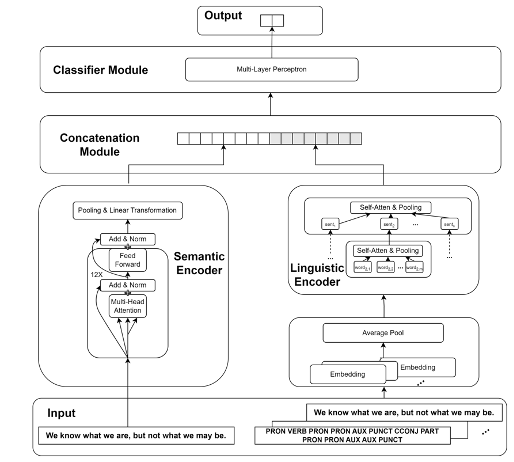
An explainable framework for assisting the detection of AI-generated textual content
Decision Support Systems, 114498

Journal articles and conference papers.
Journal article 2025
Decision Support Systems, 114498
Journal article 2025
Historical Methods: A Journal of Quantitative and Interdisciplinary History, 1–25
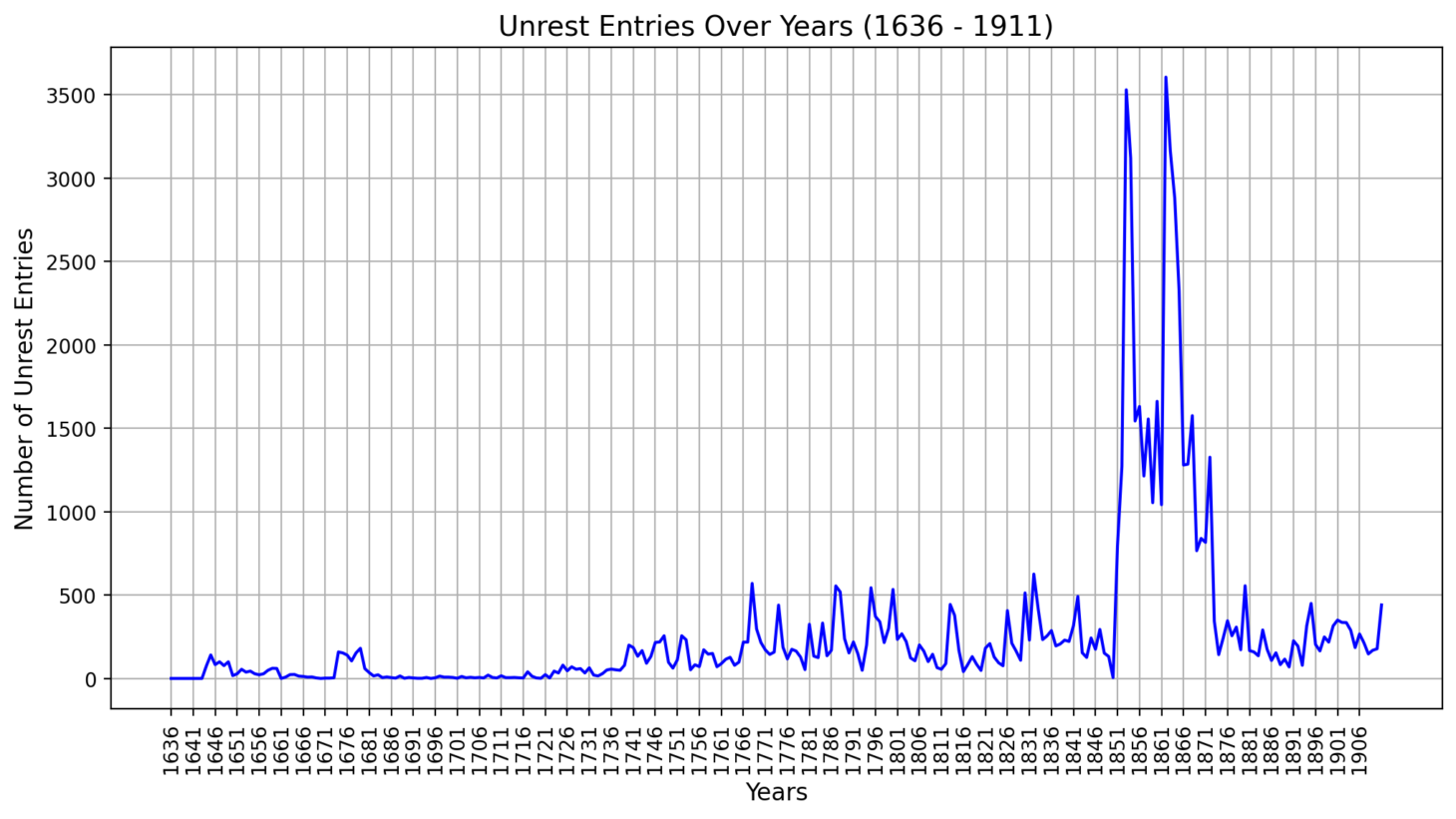
Primary historical sources are often by-passed for secondary sources due to high human costs of accessing and extracting primary information–especially in lower-resource settings. We propose a supervised machine-learning approach to the natural language processing of Chinese historical data. An application to identifying different forms of social unrest in the Veritable Records of the Qing Dynasty shows that approach cuts dramatically down the cost of using primary source data at the same time when it is free from human bias, reproducible, and flexible enough to address particular questions. External evidence on triggers of unrest also suggests that the computer-based approach is no less successful in identifying social unrest than human researchers are.
Conference paper 2024
ICIS 2024
The psychometric approach in IS offers a foundational framework for a broad spectrum of research endeavors, which typically rely on construct validation to confirm that a series of indicators accurately measures the intended construct. However, a longstanding issue with construct validity, unaddressed since its introduction by Cronbach and Meehl in 1955, is that it is evaluated using study-specific response data without comparison to constructs outside the study. This oversight (or, rather, incapability) has significant implications. We introduce a large language model combined with principal components analysis (PCA) and develop the Validity Lodestar application. This approach lays the groundwork for developing more accurate and reliable theoretical models, marking a significant leap forward in the IS discipline’s methodological capabilities, making IS the first psychometric discipline with the capability to properly evaluate construct validity.
Conference paper 2022
DESRIST 2022, 55–67
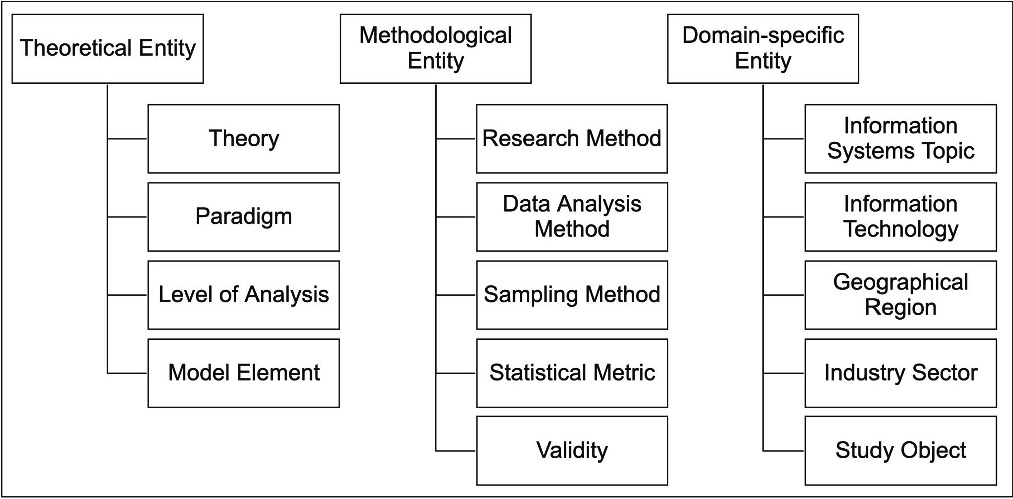
We introduce the Information Systems Ontology (ISO), a new ontology for the Information Systems (IS) discipline designed to enable automated knowledge synthesis and meta-analysis of research findings in IS. We constructed ISO in a methodical manner, following known best practices for ontology construction. We also conducted a series of ontology refinement steps in which we compared and extended ISO by extracting and examining both overlapping and missing key phrases from scientific articles and existing classification schemas. To evaluate ISO, we extracted author-defined keywords from more than 7,000 articles of the senior scholars’ basket of journals and measured terminological coverage. In one experiment, we found that our ontology included 3.6 times more author-defined keywords than an established classification schema for IS. In the future, we plan to use ISO to automatically annotate important IS terms and concepts in IS articles to help synthesize and analyze knowledge in IS.
Conference paper 2021
IJCAI 2021, 2314--2320
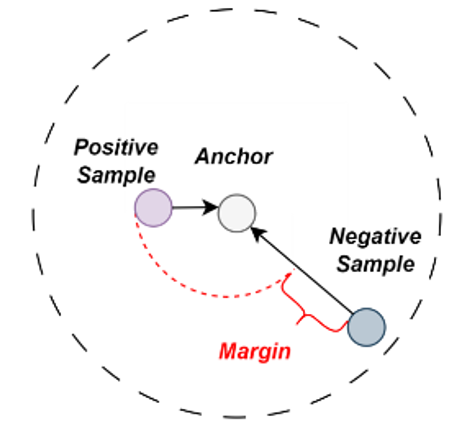
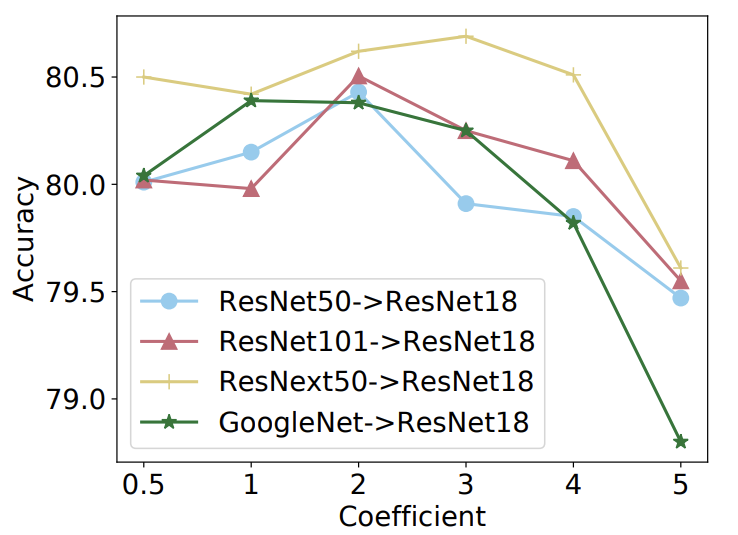
Knowledge distillation uses both real hard labels and soft labels predicted by teacher models as supervision. Intuitively, we expect the soft labels and hard labels to be concordant w.r.t. their orders of probabilities. However, we found critical order violations between hard labels and soft labels in augmented samples. For example, for an augmented sample x=0.7∗panda+0.3∗cat, we expect the order of meaningful soft labels to be Psoft(panda|x)>Psoft(cat|x)>Psoft(other|x). But real soft labels usually violate the order, e.g. Psoft(tiger|x)>Psoft(panda|x)>Psoft(cat|x). We attribute this to the unsatisfactory generalization ability of the teacher, which leads to the prediction error of augmented samples. Empirically, we found the violations are common and injure the knowledge transfer. In this paper, we introduce order restrictions to data augmentation for knowledge distillation, which is denoted as isotonic data augmentation (IDA). We use isotonic regression (IR) -- a classic technique from statistics -- to eliminate the order violations. We show that IDA can be modeled as a tree-structured IR problem. We thereby adapt the classical IRT-BIN algorithm for optimal solutions with O(clogc) time complexity, where c is the number of labels. In order to further reduce the time complexity, we also propose a GPU-friendly approximation with linear time complexity. We have verified on variant datasets and data augmentation techniques that our proposed IDA algorithms effectively increases the accuracy of knowledge distillation by eliminating the rank violations.
Conference paper 2020
WITS 2020
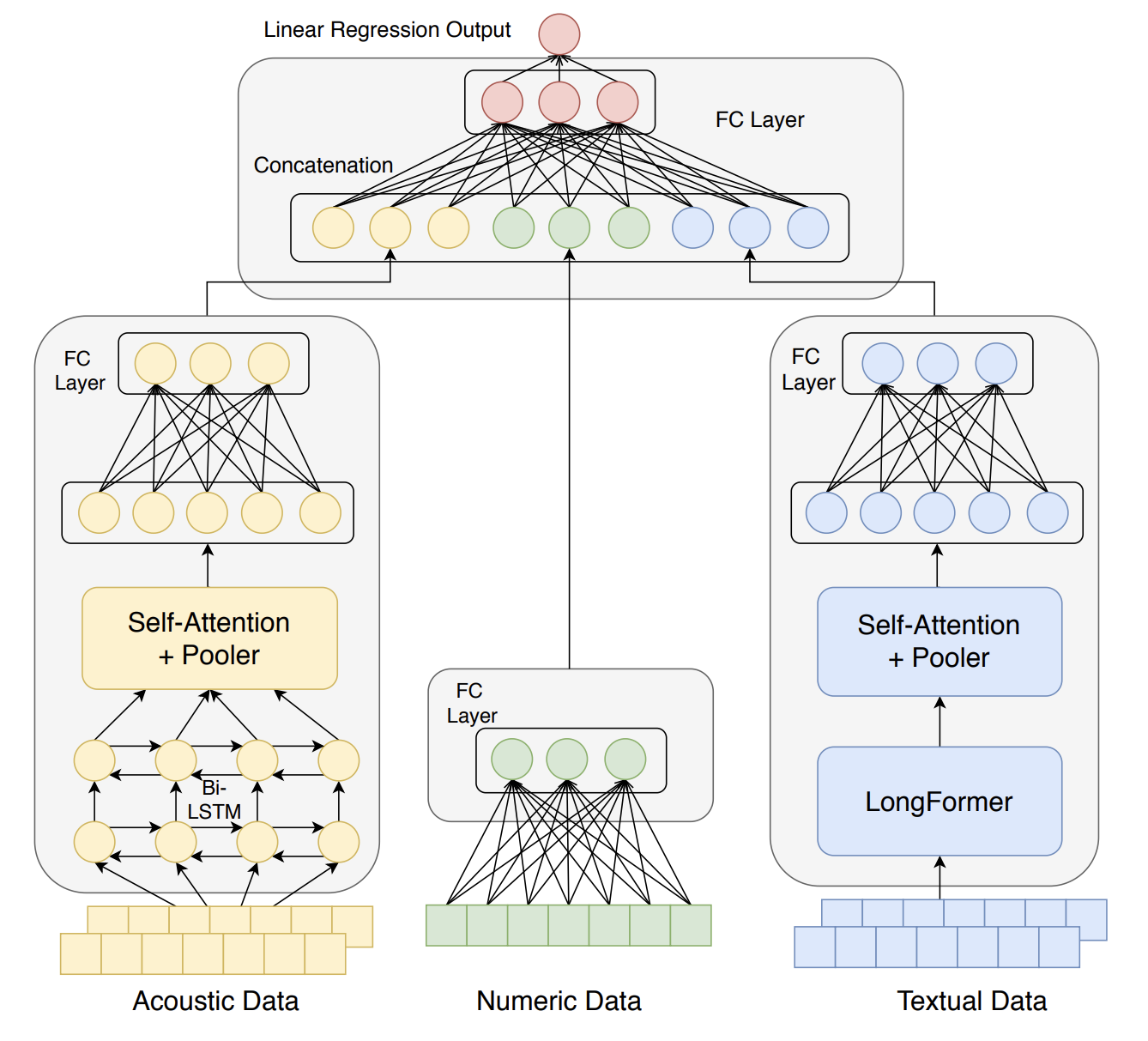
Earnings conference calls have been recently recognized as significant information events to the market due to its less constrained fashion and direct interaction between managers and analysts. However, it is a non-trivial task to fully exploit the information contained in these conference calls due to its multimodality. To tackle this problem, we develop a general multimodal deep learning framework called UnitedANT (A, N, T stands for Acoustic, Numeric, and Textual information respectively) which could simultaneously leverage acoustic, numeric, and textual information of conference calls for predicting corporate financial risk. Empirical results on a real-world dataset of S&P 500 companies demonstrate the superiority of our proposed method over competitive baselines from the extant literature. Our ablation study presents evidence that all three modalities are useful for financial risk prediction, and the exclusion of any one or two of them will lead to a drop in model performance.